
Tip
TL;DR: The next generation of development environments may move beyond code editors to project-centric workspaces where humans and AI agents collaborate across research, planning, implementation and verification. Humans provide intent, priorities and engineering judgment, while coordinated agents handle delegated work with shared, carefully managed context. The goal is not to replace software engineering, but to make the entire process of building products more intelligent.
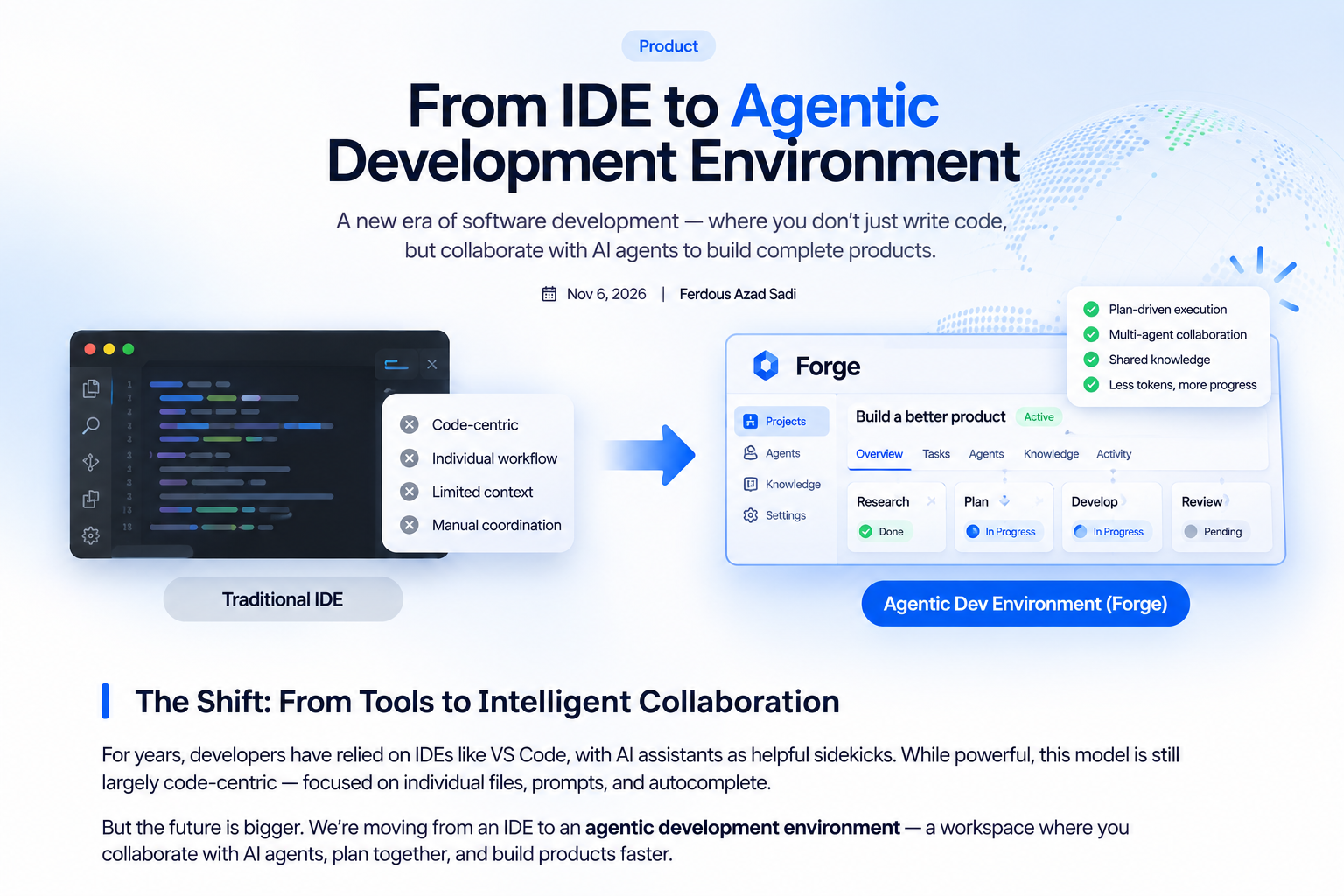
#The IDE Was Built Around Code. What Comes Next?
For decades, the Integrated Development Environment (IDE) has been the central workspace for software developers.
We open an editor, navigate files, write code, run commands, inspect errors, debug applications and manage deployments. Everything revolves around code and the tools required to manipulate it.
AI changed part of this experience.
First came code completion. Then conversational coding assistants. Now, AI agents can understand repositories, modify multiple files, execute commands, run tests and work on complex engineering tasks.
But there is a bigger transition happening.
What if the next generation of development environments isn’t primarily designed around writing code?
What if the central workspace becomes the product itself?
I believe we are moving toward Agentic Development Environments (ADEs) — collaborative, intelligent workspaces where humans and AI agents work together throughout the entire software development lifecycle.
#1. From Code Editors to Product Development Workspaces
Traditional IDEs are designed around individual developers interacting with code.
Even modern AI-powered IDEs often retain the same fundamental structure: a code editor with an AI assistant in a sidebar.
This is useful, but it doesn’t fully address the possibilities of agentic software development.
Building a product involves much more than writing code:
- Understanding a problem and researching potential solutions.
- Defining product requirements and user experiences.
- Making architectural decisions.
- Breaking complex objectives into manageable tasks.
- Coordinating engineering work.
- Testing and validating implementations.
- Reviewing changes and managing releases.
- Learning from failures and improving the product.
These activities deserve to be first-class parts of the development environment.
Instead of switching between documentation, research tools, project management boards, terminals, code editors and AI conversations, imagine bringing the entire development process into one collaborative workspace.
The project becomes the primary interface.
Code remains important, but it no longer needs to be the place where every development activity begins.
#2. Humans Become the Architects of Intent
An important misconception about AI-driven software development is that humans will simply give instructions and let AI do everything.
I see a different future.
The most important human contributions will increasingly involve:
Explanation
Humans explain what they want to build, why it matters, who it serves and what problems it should solve.
Planning
Humans establish priorities, requirements, constraints, architectural direction and acceptable trade-offs.
Engineering judgment
Humans define what good engineering means for a particular product. This includes maintainability, performance, reliability, security and scalability.
Engineering ethics
AI systems need boundaries. Decisions involving privacy, security, accessibility, customer data and responsible use cannot simply be left to an agent’s interpretation.
AI should have implementation autonomy within clearly established engineering principles, not unlimited authority over product decisions.
The human role doesn’t disappear. It moves toward higher-level thinking and decision-making.
#3. Multi-Agent Development Changes the Engineering Workflow
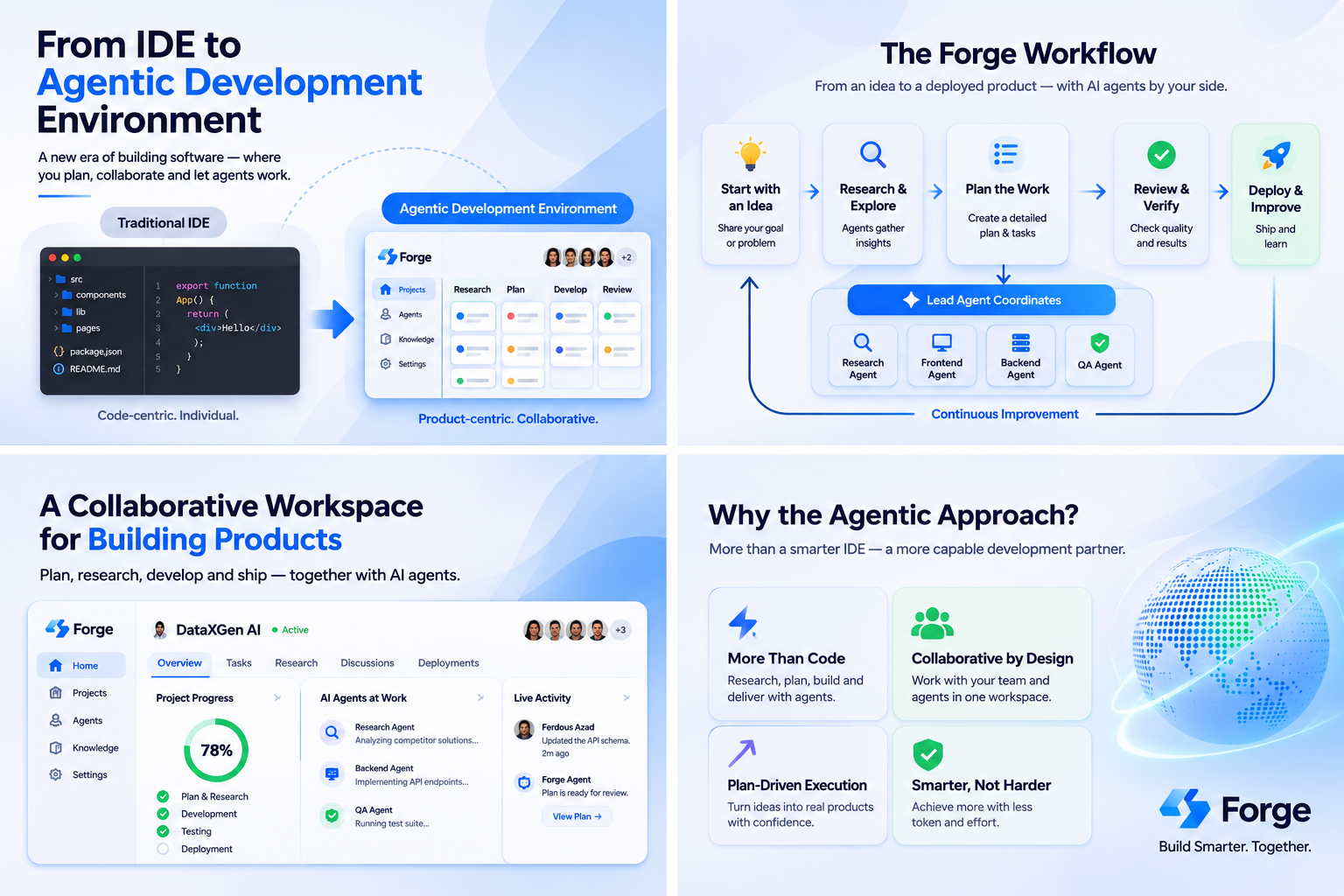
A single AI agent can already perform substantial engineering work.
However, complex products involve different areas of expertise. This creates an opportunity for coordinated agent teams.
Consider a development environment with:
- A lead agent responsible for understanding objectives and coordinating work.
- Frontend agents responsible for user interfaces.
- Backend agents responsible for APIs, databases and business logic.
- QA agents responsible for testing and verification.
- Research agents responsible for investigating technical and product questions.
The important part isn’t simply having multiple agents.
It’s how they collaborate.
A lead agent can interpret the overall objective, create a development plan, divide responsibilities and provide workers with the information required for their tasks.
Workers execute independently within their assigned responsibilities and return results for integration and review.
This is fundamentally different from opening several AI coding sessions and asking each one to work independently.
The development environment needs to understand the relationships between tasks, agents, decisions and the product itself.
#A Typical Agentic Development Workflow
The following workflow illustrates how a project-centric environment could coordinate human direction, shared project knowledge and specialized agents. The exact implementation can vary between systems.
flowchart TD
    A[Founder or Team: Explain the product goal] --> B[Project Workspace]
    B --> C[Research and Discover]
    C --> D[Plan and Define Requirements]
    D --> E[Human Review and Approval]
    E --> F[Lead Agent]
    F --> G[Retrieve Relevant Project Context]
    G --> H[Prepare Focused Task Briefs]
    H --> I[Delegate Work to Agents]

    I --> J[Frontend Agent]
    I --> K[Backend Agent]
    I --> L[Research or QA Agent]

    J --> M[Implementation Results]
    K --> M
    L --> N[Verification Evidence]
    M --> O[Integration and Review]
    N --> O
    O --> P{Meets the Proof Bar?}

    P -- No --> Q[Identify Gaps and Re-plan]
    Q --> F
    P -- Yes --> R[Human Review / Approval]
    R --> S[Release or Deployment]
    S --> T[Feedback, Lessons and Updated Knowledge]
    T --> B
#4. Context Is More Important Than Simply Adding More Agents
There is a problem with multi-agent systems that deserves more attention: context duplication.
When multiple agents independently receive large amounts of project information, they can consume substantial tokens repeating the same context.
More agents do not automatically produce better results.
A more interesting architecture involves persistent project knowledge and selective context distribution.
For example, a project may contain:
- Product requirements and specifications.
- Architectural decisions.
- Engineering rules and conventions.
- Previous implementation lessons.
- Research and technical references.
- Development history.
- Current tasks and dependencies.
A lead agent can use this information to prepare focused instructions for individual workers.
Instead of giving every agent the entire project history, each receives the relevant requirements, constraints, references and expected verification criteria.
This introduces another important engineering challenge: memory freshness.
Shared project knowledge should distinguish between approved decisions, historical information, observations and unverified assumptions. Old information must not silently become a current instruction.
A useful memory system should track when information was recorded, when it was last verified and whether it remains valid.
#The Token Efficiency Question
There is an interesting research hypothesis here:
Can a hierarchical multi-agent system achieve better engineering outcomes with fewer tokens by reducing duplicated context and improving task hand-offs?
This should be measured rather than assumed.
A meaningful experiment would compare independent agents against a coordinated lead-and-worker architecture using identical development tasks.
The measurements should include:
- Total token consumption.
- Actual execution cost.
- Task completion rate.
- Test and verification results.
- Regression rate.
- Human intervention.
- Overall completion time.
The objective isn’t merely to reduce AI consumption. It is to achieve better engineering outcomes with less duplicated effort.
#5. The Development Environment Becomes Collaborative
Software development has traditionally been organized around individual developers, repositories and project management systems.
Agentic development introduces another dimension: humans and AI agents participating in the same development workspace.
Imagine a founder starting with an idea.
They discuss the opportunity with an AI agent, conduct research, explore different approaches and develop a product plan.
The plan becomes actionable tasks.
A lead agent coordinates engineering agents. Team members can review progress, contribute ideas, challenge architectural decisions and inspect results.
Development becomes a continuous collaborative process rather than a sequence of disconnected coding sessions.
This is particularly interesting for founders and small teams.
A small team could coordinate substantial engineering work without requiring every person to manually manage every implementation detail.
The workspace becomes the shared operating environment for the entire product.
#6. Introducing Forge: A Different Way to Think About Development
At DataXGen AI, we’re exploring this direction through Forge.
Forge is an AI harness and project-centric workspace designed for agents and founders working on one or multiple products.
The idea is to move beyond the traditional experience of opening coding-agent terminals or IDEs with AI chat panels.
Instead, Forge brings product development into a collaborative online workspace.
The broader vision includes:
- Project-centric workspaces.
- Brainstorming and collaborative planning.
- Research and knowledge management.
- Coordinated AI agent workflows.
- Development plans and task management.
- Shared project context and team collaboration.
- Engineering progress and verification.
The philosophy is straightforward: people should be able to participate in software development without constantly navigating source files, terminals and individual AI conversations.
Developers should still have access to code when they need it. Understanding implementation details remains essential for debugging, security, architecture and performance.
But reading and writing code shouldn’t be the only way to interact with the development process.
The goal is to make the entire product development lifecycle accessible through a more intelligent interface.
#7. Code Becomes an Implementation Detail, Not the Entire Experience
This doesn’t mean code becomes irrelevant.
Software still requires precise instructions, algorithms, data structures, architecture and engineering discipline.
What changes is the relationship between humans and implementation.
Today, developers spend considerable time translating requirements into code and coordinating the tools required to deliver software.
In an agentic development environment, humans can focus more on:
- What should be built?
- Why should it be built?
- How should the system behave?
- What architectural principles should it follow?
- What are the acceptable trade-offs?
- How do we verify that the result is correct?
AI agents can take responsibility for much of the implementation work, while humans retain direction, judgment and accountability.
This is not the elimination of software engineering.
It is a change in how software engineering is practiced.
#8. The Challenges We Still Need to Solve
There are significant engineering problems before this vision becomes dependable.
Reliability: Agents must produce verifiable results, not merely convincing explanations.
Context management: Systems need to preserve relevant knowledge without overwhelming agents with unnecessary information.
Coordination: Multiple agents need clear responsibilities, dependencies and integration strategies.
Security: Agent permissions, access control and execution boundaries must be carefully designed.
Verification: Testing, independent review and evidence of completion must be integral to the workflow.
Human accountability: Important product and engineering decisions must remain transparent and controllable.
These are not minor implementation details. They are foundational requirements for the next generation of development environments.
#Conclusion: The Future IDE Is a Place to Build Products
The evolution of software development is not simply about generating more code with fewer developers.
It is about changing the interface between human thinking and machine execution.
The IDE of the future may look less like a traditional code editor and more like an intelligent product development workspace.
Humans will explain, research, plan, make decisions and establish engineering principles.
AI agents will collaborate, implement, test and execute delegated work.
The most successful environments will not necessarily be the ones with the largest number of agents or the most powerful models. They will be the ones that coordinate intelligence, context and execution reliably.
We may be moving from an era where developers primarily interact with code to an era where developers primarily interact with the systems that build software.
And perhaps that is the most interesting future of the IDE: not making the code editor smarter, but making the entire process of building software more intelligent.
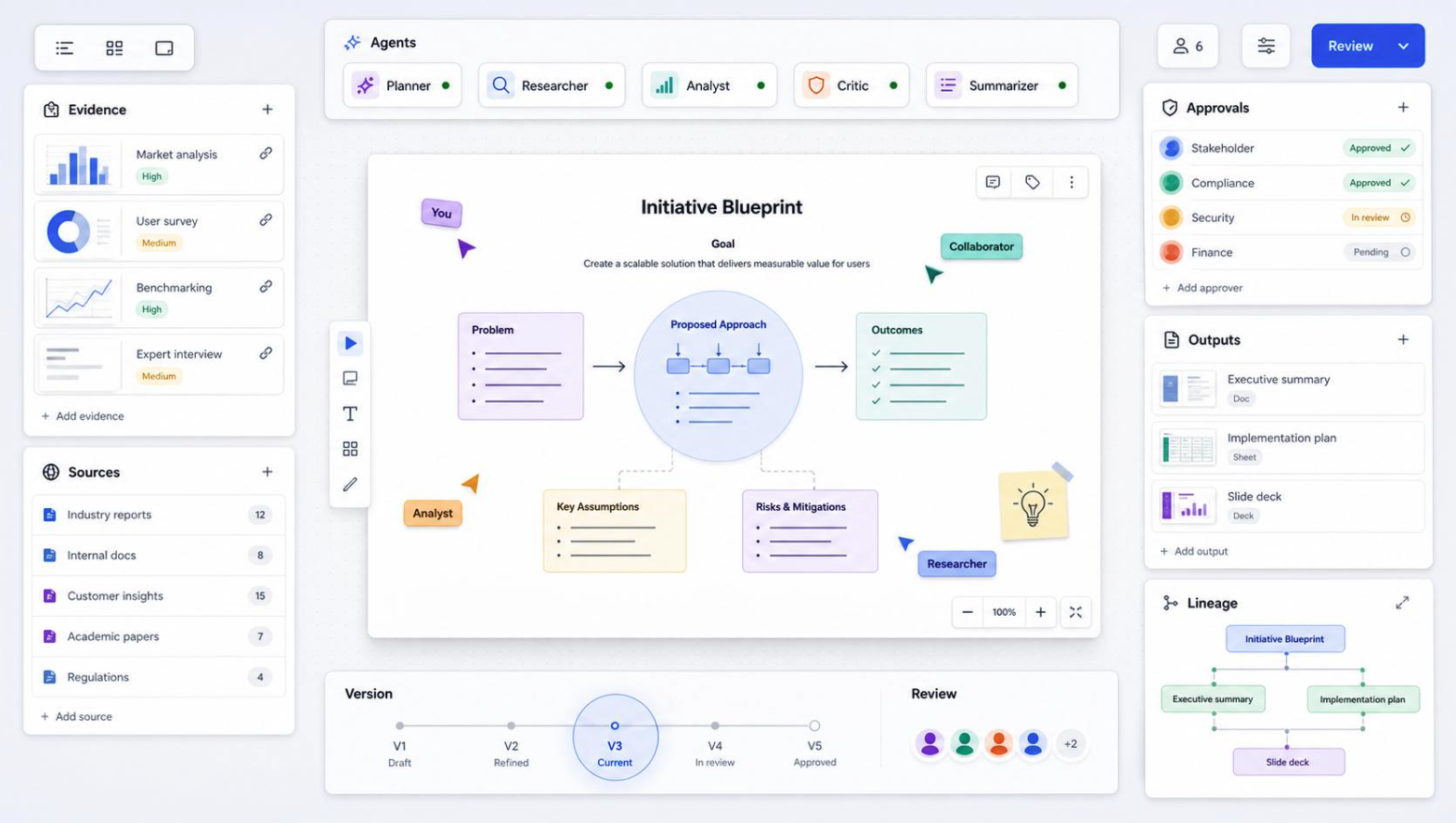
Image Source: Agentic Blueprint
new era where developers coordinate intelligent systems to build complete products.
That transition will not happen because code disappears, or because agents become fully autonomous. It will happen as development environments become better at connecting human intent, project knowledge, engineering decisions and delegated execution in one place.
The IDE is not ending. It is expanding into something more intelligent: a workspace where people and AI agents can plan, build and verify software together.
#FAQ
What is an Agentic Development Environment (ADE)?
An ADE is a collaborative, project-centric workspace where humans and AI agents work together across research, planning, implementation and verification. It treats the product development process—not just the code editor—as the central experience.
How is an ADE different from an AI-powered IDE?
An AI-powered IDE often adds an assistant to a code editor, while an ADE aims to bring activities such as research, planning, task coordination, testing and product decisions into one workspace.
What do humans do in agentic software development?
Humans define product intent, priorities, requirements, constraints and engineering principles, then review important decisions and results. AI agents can handle delegated implementation and verification work, but human judgment and accountability remain essential.
Why does context management matter in multi-agent development?
Giving every agent the full project history can duplicate context and waste tokens. A coordinated system can provide each agent with focused requirements, constraints and verification criteria while keeping shared project knowledge current and clearly distinguished from assumptions or historical information.
development era where they coordinate intelligence to build products.
That is the fundamental shift behind Agentic Development Environments: not removing developers from the process, but giving them a more intelligent way to guide and verify it. The future of building software will depend on how well humans and agents share context, divide responsibilities and turn intent into dependable results.




Comments
No comments yet. Start the conversation.